Millcreek UT Wolcott Optical

Wolcott Optical

Call Today!

801-441-3233
fgInstagram - Wolcott Opticalx&
  • Eyeglasses
    • Prescription Glasses
    • Bifocals
    • Reading Glasses
    • Lenses
    • Blue Light Blocking Glasses
    • Prescription Safety Glasses
    • Frames
      • Seraphin
      • Elasta
      • Kate Spade
      • Liz Claiborne
      • Etnia Barcelona Frames
      • l.a. Eyeworks
      • David Spencer Eyewear
      • Calvin Klein Frames
      • David Beckham
      • Hugo Boss
      • Nike Frames
      • Oakley Frames
      • Missoni Frames
      • Airlock Titanium Frames
      • Carolina Herrera
      • Fossil
      • Tommy Hilfiger
  • Sunglasses
    • Sunglasses For Men
    • Sunglasses For Women
    • Polarized Sunglasses
    • Prescription Sunglasses
    • Sunglass Brands
      • Maui Jim Sunglasses
      • Kaenon Polarized
      • Ray-Ban
      • Zeal Optics
      • Rudy Projects
      • Spy Optics
      • Oakley Sunglasses
      • Missoni Sunglasses
      • Fossil
  • Contacts
  • About
    • Our Team
    • Blog
  • Contact

Are Glasses And Contact Lens Prescriptions The Same?

Home | Eyeglasses | Page 23

Millcreek UT Eyeglasses

If you typically wear glasses rather than contact lenses or vice versa, you may assume that getting a pair of the other would be as easy as calling your eye doctor and ordering them. This isn’t so, though. Unless you’ve tried to do this or you use both glasses and contact lenses, you may not know that glasses and contact lens prescriptions are not the same. 

You need a separate prescription for glasses and for contact lenses due to some seemingly minute but significant differences between the two. If you wear contact lenses, your eye doctor may already provide you with a glasses prescription. However, this is not always the case.

Here is what you need to know about the differences between glasses and contact lens prescriptions, and what to do if you want to try the other type of lenses out.

Why Are Glasses And Contact Lens Prescriptions Different?

If you’re surprised to learn that glasses and contact lens prescriptions are different, you’re not alone. Many people assume that a prescription is a prescription, and that if you already have glasses, you should be able to get contacts with ease.

Glasses and contact lens prescriptions are different due to how you wear them. Glasses sit on the bridge of your nose, about 12 millimeters away from your eyes. Contact lenses are worn directly on your cornea. Because of the difference in how far away they are from your eyes and how you wear them, they require separate prescriptions.   

How Are Glasses And Contact Lens Prescriptions Different?

Glasses and contact lens prescriptions are different in more ways than you may expect! Here are some of the chief ways in which they differ. 

contact lenses Salt Lake City Utah

For Contacts

Because you wear contact lenses on your eyes, a contact lens prescription needs to be fitted to the size and shape of your eye. They don’t just need to have the lens strength, they also need to be fitted to your individual eyes so that they are comfortable. Different people have differently shaped and sized eyes, which impacts the contacts they wear. 

Different people also have different demands of their contacts: for instance, one person might need more breathability in their lenses because they wear them for long periods of time or accidentally fall asleep in them from time to time. This is why when you get contact lenses, your eye doctor may have you try out different brands and then include the brand that works best for you on your prescription. 

For Glasses

Since you wear glasses at a slight distance from your eyes, glasses prescriptions need your pupillary distance (the distance between your pupils), so you don’t have to worry about crossing your eyes or anything like that. Glasses prescriptions are often weaker than contact lens prescriptions due to the fact that the space between their lenses and your eyes leads to a change in prescription strength. 

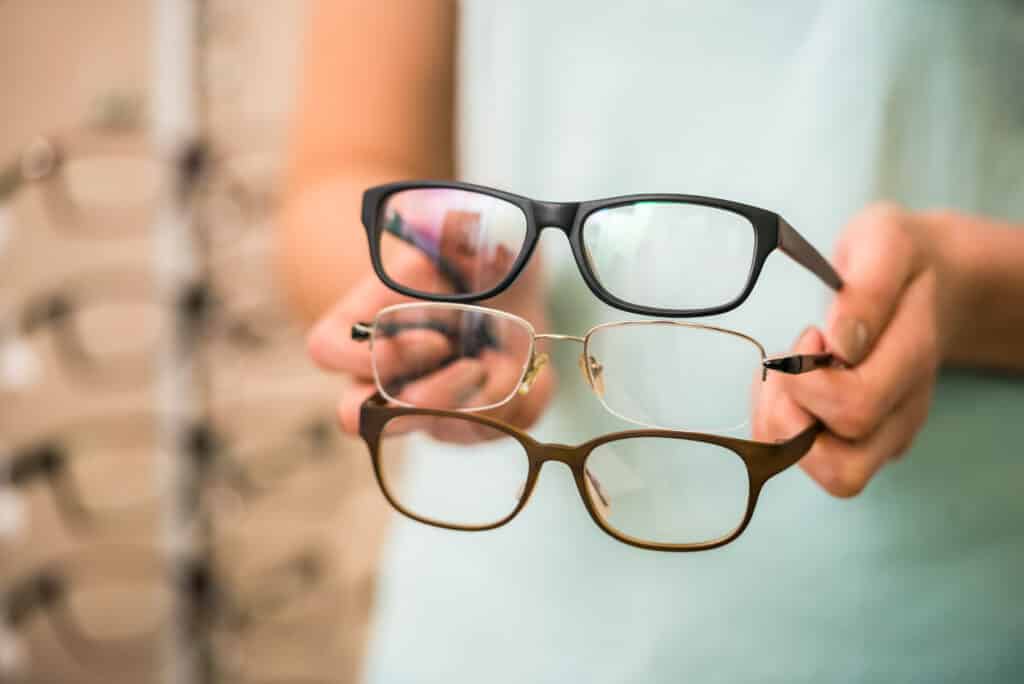
While your contact lens prescription includes how they should fit, when you purchase glasses, the people you purchase them from will have you try different frames on and ask how they feel. They may make adjustments to the frames in order to help them fit you better. You may opt for one pair of frames over another, due to style, fit, and price.

What Do You Do If You Want To Get Another Prescription?

glasses and contact lens prescriptions

If you’re an avid glasses or contacts wearer and you want to give the other type of lens a go, you’ll likely need to make an appointment with your eye doctor. Sometimes, when you have your yearly eye exam, your eye doctor will fit you for both contacts and glasses and provide you with both prescriptions. However, state laws vary, and you may need to have different appointments to be fitted. 

If you want to try out contacts, you will need a contact lens fitting. This is so that the eye doctor can ensure they are fitted to your eyes and will be comfortable for you. 

  • About colored contacts. It’s important to note that even if you do not need corrective lenses, if you want to try out colored contacts, you will still need a contact lens prescription. A prescription without lens strength like this is a plano prescription. If you buy colored contacts from a store that does not require a prescription, you could suffer many adverse effects. Learn more about this in our previous blog: Colored Contacts And Your Eyes: Keep Your Eyes Safe This Halloween. 

If you want to try out glasses, you will need to be fitted for these too, with your pupillary difference. The parameters on glasses prescriptions can differ from contact prescriptions. If you want to try plano glasses, or glasses without corrective lenses, you can just pick these up in a store, as they do not carry the risks that non-prescription colored contacts do.

Wolcott Optical is here to help you with your glasses and contact lens needs. Contact us today to learn more about the services we can provide you with. 

Filed Under: Eyeglasses, Contacts

Screens have become a normal part of our daily lives. Whether you’re someone who likes the internet and the digital world or you’re someone who only puts up with it when you have to, we’re all exposed to blue light from our screens on a regular basis. It’s known that sunlight can cause eye strain, especially when it’s especially bright outside. But what about blue light?

Here’s what you need to know about blue light, digital eye strain, and what you can do to protect your eyes. 

What Is Blue Light?

blue light digital eye strain

Blue light doesn’t just come from our screens. It’s a type of electromagnetic wave, one with very short and high-energy wavelengths. When it comes from the sun, it helps to regulate your circadian rhythm and can boost your mood and your energy levels. 

It can also come from screens, due to LED (light-emitting diode) technology. Your phone, laptop, TV, and more all emit high levels of this light, due to said LED technologies. 

Is Blue Light Bad For You?

As previously mentioned, this type of light can actually be quite beneficial for your overall mood and energy levels, and ergo, your health. It helps to tell your body when it’s time to go to sleep and when it’s time to wake up.

However, with the advent of technology, people have been exposed to blue light from unnatural sources. This can lead to negative effects, such as an impacted sleep schedule, headaches, eye strain, fatigue, and more.

So, in short, no, during the day, it is not bad for you. However, too much of it, especially at night, can lead to adverse health effects. 

About Digital Eye Strain

Whether you love technology or you hate it, using it has been a necessary part of the vast majority of people’s daily lives. Whether you need your phone in order to contact people or you work an office job that necessitates staring at a computer screen for 8 hours a day, even if you don’t use digital devices recreationally, for social media or watching videos or whatever else, we’re all using screens, and we’re all exposed to high levels of blue light. 

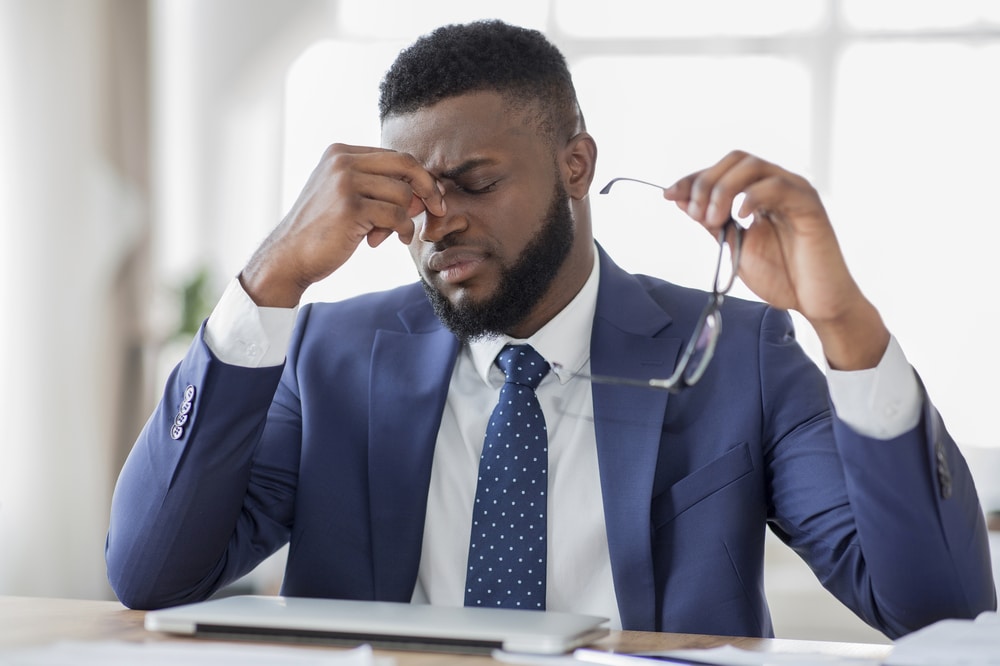
In truth, the amount of light that is emitted from our devices is small, compared to how much the sun sends out. However, if you spend a lot of time on digital devices, your eyes get exposed to abnormal amounts of this type of light. This, combined with the amount of focus needed in order to focus on a screen, can lead to eye strain. 

Eye strain can cause a variety of problems, from blurry vision to dry and itchy eyes to headaches and more. Some studies have shown an increased risk for macular degeneration with blue light. 

If your eyes hurt after looking at a screen, it’s a good idea to adhere to the “20-20-20 rule”. This means that every 20 minutes, you look at something 20 feet away (that isn’t a screen) for 20 seconds. This can help to stave off the risk of eye strain.

Blue Light Glasses - Wolcott Optical

Can Blue Light Blocking Glasses Help With Digital Eye Strain?

You would think so! However, there isn’t a clear consensus on how much these glasses can actually help with this type of eye strain. Some people claim that such glasses can do wonders for your eyes, while others claim that they don’t do much at all. 

However, this type of glasses can help with your circadian rhythm. This is because through filtering out blue light, you can enjoy some protection from some of the adverse effects of overexposure to blue light, such as insomnia. 

Some people do report that using blue light blocking glasses improve their eye comfort when using screens for extended periods of time. If you have any questions about eye strain from digital devices and what you can do to prevent it, you can talk to your eye doctor at your next eye exam about your specific circumstances.

Generally, combining the 20-20-20 rule with blue light blocking glasses and reduced use of digital devices at night time can reduce some of the negative effects of too much screen time.

Are You Considering Blue Light Blocking Glasses?

Wolcott Optical provides them in a wide variety of styles, so that you can select a pair that suits your specific style and personality. You don’t need a prescription for this type of glasses, so if you already have 20-20 vision, that doesn’t mean that these are not an option for you. To learn more about blue light blocking glasses, please do not hesitate to contact us today!

Filed Under: Eyeglasses

If you’ve been trying to learn how to safely use eye makeup, you’ve likely run into countless articles telling you that the best way to keep your eyes healthy is to avoid eye makeup entirely. While it’s true that you won’t run into the problems associated with eye makeup if you simply don’t use it, such “advice” can be very frustrating and irritating, especially if you enjoy makeup and it is important to you. You’re not just going to stop wearing eye makeup because it can cause issues – you’re trying to learn how to safely use eye makeup to avoid said issues while still being able to enjoy your creativity. 

Here at Wolcott Optical, we understand that. That’s why we’ve compiled this list of tips that you can follow in order to safely use eye makeup. You don’t have to sacrifice health for beauty, nor vice versa. Here’s what you need to know about how to safely use eye makeup.

Be Mindful Of Infection

safely use eye makeup

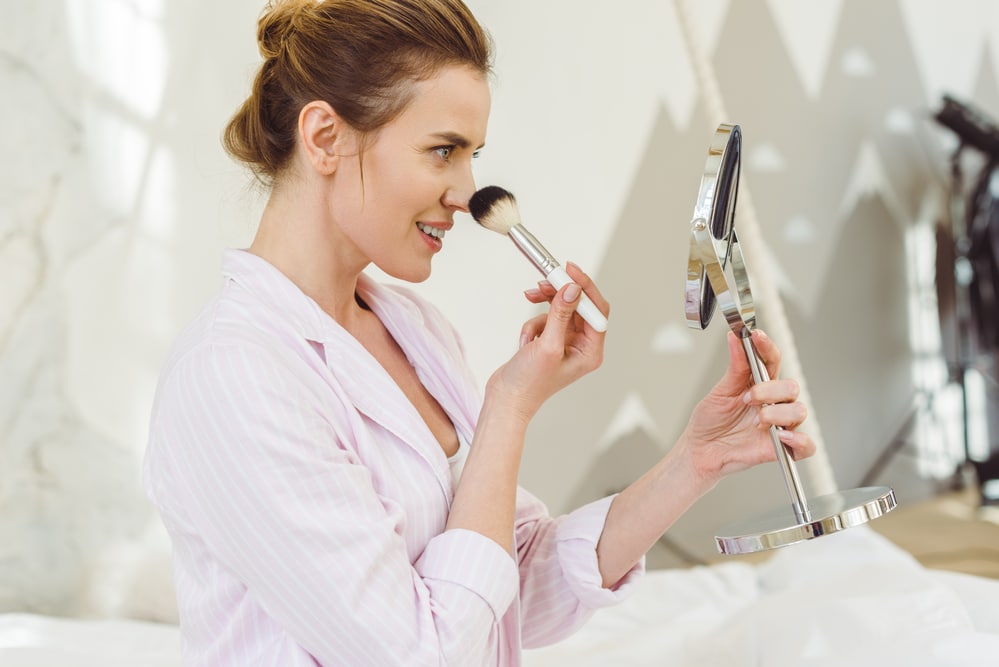
Eye makeup can cause infection in multiple different ways. Those tester counters at the makeup stores may be fun, but they’re also full of bacteria that can infect your eyes. We know that selfishness is usually seen as a bad trait, but when it comes to your eye makeup, you want to be selfish with it. Sharing makeup, even with friends and family, can lead to infection. One of the best ways to safely use eye makeup is to only use your own and not to share it with anyone. 

Store samples are there so you can test out eyeshadows and other eye makeup, but you want to avoid putting these on your eyes. Many people have gotten pink eye, styes, and other eye infections and problems from sharing their eye makeup and using store samples. It’s fine to want to test out that pretty new shade of eyeshadow, but test it against the back of your hand rather than putting it on your eye. That way, you can see the pigmentation and texture without putting your eyes at risk. 

Keep It Clean!

One of the best ways to safely use eye makeup is to ensure that the process is as clean as can be. We know that makeup tends to explode everywhere when you’re applying it. By this, we mean, ensure that your brushes are clean and that your face and eyelids are clean prior to makeup application. Even if your makeup brushes look clean, they can still have bacteria on them. In order to safely use eye makeup, you’ll want to ensure that you clean your makeup brushes at least once a week with water and baby soap. 

Don’t Use Expired Makeup

Did you know that makeup can expire? Many people don’t! However, it does, and if you want to safely use eye makeup, you’ll need to ensure that the products you use are still good. Otherwise, you guessed it, you run the risk of infection, as well as allergic reactions, scratches to your eyes, and other eye problems, such as conjunctivitis. 

safely use eye makeup

To safely use eye makeup, you’ll want to be mindful of expiration dates. In general, you can expect makeup to last a certain amount of time before it expires. We understand wanting to get the most out of your investment, but using expired makeup can seriously hurt your eyes. It’s not worth it! You never want to use expired makeup. To safely use eye makeup, ensure that it’s still good.

Here’s what you need to know about how long eye makeup lasts.

  • Mascara: This generally lasts around 3-6 months. 
  • Eyeliner: Liquid eyeliner should be replaced every 3-6 months. Eyeliner pencils can last up to 2 years.
  • Eyeshadow: Cream and liquid eyeshadows generally last 6-12 months. Powder eyeshadow can last 2-3 years.
  • Eyeshadow primer: This can last 6-12 months.

Apply It Safely

In order to avoid injury and infection and other eye issues from eye makeup, you need to ensure that you’re applying it safely. 

This means not applying eye makeup in moving vehicles or if you have shaky hands, are overly tired, or are under the influence. You want to avoid applying eyeshadow or eyeliner to your inner eyelid, as this can clog them and irritate your eyes. You also want to avoid using anything sharp to separate your lashes, as you can easily stab or poke yourself this way. You also want to exercise care when using sparkly, glittery, or metallic eyeshadows, so that the particles don’t get into your eyes, especially if you wear contact lenses.

safely use eye makeup

Additionally, if you’ve recently had eye surgery, you should avoid eye makeup until your eye doctor tells you it is safe to wear it again. 

As you see, there are many different things you can do to safely use eye makeup. These are but a few of the steps you can take to protect your eyes. 

Wolcott Optical is passionate about protecting eye health. If you have any questions, don’t hesitate to contact us to schedule an eye exam today.

Filed Under: Contacts, Eyeglasses

  • « Previous Page
  • 1
  • …
  • 21
  • 22
  • 23
  • 24
  • 25
  • …
  • 33
  • Next Page »
Eyeglasses Salt Lake City Utah Wolcott Optical

Hours

Wolcott Optical Services, LC
3145 S Highland Dr
Millcreek, UT 84106
801-441-3233
Monday Closed
Tuesday 9:00 AM - 5:30 PM
Wednesday 9:00 AM - 5:30 PM
Thursday 9:00 AM - 5:30 PM
Friday 9:00 AM - 5:30 PM
Saturday 10:00 AM - 3:00 PM
Sunday Closed

Holiday Hours

We will be closed on Thursday, the 27th, for Thanksgiving Day

Hours

Monday Closed
Tuesday 9:00 AM - 5:30 PM
Wednesday 9:00 AM - 5:30 PM
Thursday 9:00 AM - 5:30 PM
Friday 9:00 AM - 5:30 PM
Saturday 10:00 AM - 3:00 PM
Sunday Closed

Holiday Hours

Saturday, Feb. 14th Closed

SUBSCRIBE & SAVE

Follow Us

fgInstagram - Wolcott Opticalx&
Salt Lake City's Best Award Winner 2021 Gold for Best Eyewear Shop by The Salt Lake Tribune

Medical Disclaimer: Information on this site is not medical advice and is for educational purposes only. No doctor-patient relationship is formed. Click here for Full Legal Disclosures


2026 | Wolcott Optical | All Rights Reserved | Privacy Policy | Terms | Accessibility Statement | Anti-Discrimination Disclaimer | Healthcare Disclaimer | HIPAA Notice of Privacy Practices | XML Sitemap | Sitemap | Site by PDM