Millcreek UT Wolcott Optical

Wolcott Optical

Call Today!

801-441-3233
fgInstagram - Wolcott Opticalx&
  • Eyeglasses
    • Prescription Glasses
    • Bifocals
    • Reading Glasses
    • Lenses
    • Blue Light Blocking Glasses
    • Prescription Safety Glasses
    • Frames
      • Seraphin
      • Elasta
      • Kate Spade
      • Liz Claiborne
      • Etnia Barcelona Frames
      • l.a. Eyeworks
      • David Spencer Eyewear
      • Calvin Klein Frames
      • David Beckham
      • Hugo Boss
      • Nike Frames
      • Oakley Frames
      • Missoni Frames
      • Airlock Titanium Frames
      • Carolina Herrera
      • Fossil
      • Tommy Hilfiger
  • Sunglasses
    • Sunglasses For Men
    • Sunglasses For Women
    • Polarized Sunglasses
    • Prescription Sunglasses
    • Sunglass Brands
      • Maui Jim Sunglasses
      • Kaenon Polarized
      • Ray-Ban
      • Zeal Optics
      • Rudy Projects
      • Spy Optics
      • Oakley Sunglasses
      • Missoni Sunglasses
      • Fossil
  • Contacts
  • About
    • Our Team
    • Blog
  • Contact

What Are Eye Floaters? Why You Usually Don’t Need To Worry About Them

Home | Eyeglasses | Page 24

eye floaters

You know when you look up at the sky or at a blank Word document on your computer screen and you have little squigglies in your vision? These are called eye floaters. If you have them, you may wonder whether or not they’re something to be concerned about. In truth: it depends. In most cases, you don’t need to worry about floaties in your vision. However, there are some cases where you will need to contact an eye specialist about them.

Here is what you need to know about eye floaters, what causes them, and when they are and are not cause for concern. Let’s get into it!

What Are Eye Floaters?

These are spots in your vision. They can look a few different ways. You may see them as squigglies, black or gray specks, or threads. They come in a variety of shapes and sizes. 

You usually notice them when you look at something light-colored, like a blank document, a light wall, the sky, or something else like that. They move with your eye, but there’s usually a lag before the floaters go in the direction your eyes went.

However, if you try to look at a floater, you’ll find that it moves out of your line of vision. Floaters will typically settle down and drift out of your line of vision, causing you to notice them less. 

What Causes Floaters?

Floaters can be caused by a variety of different factors. If you notice a sudden increase in the amount of floaters you have and they start to impact your vision, you should contact an eye doctor right away, as this could be a sign of a serious eye issue. 
eye floaters

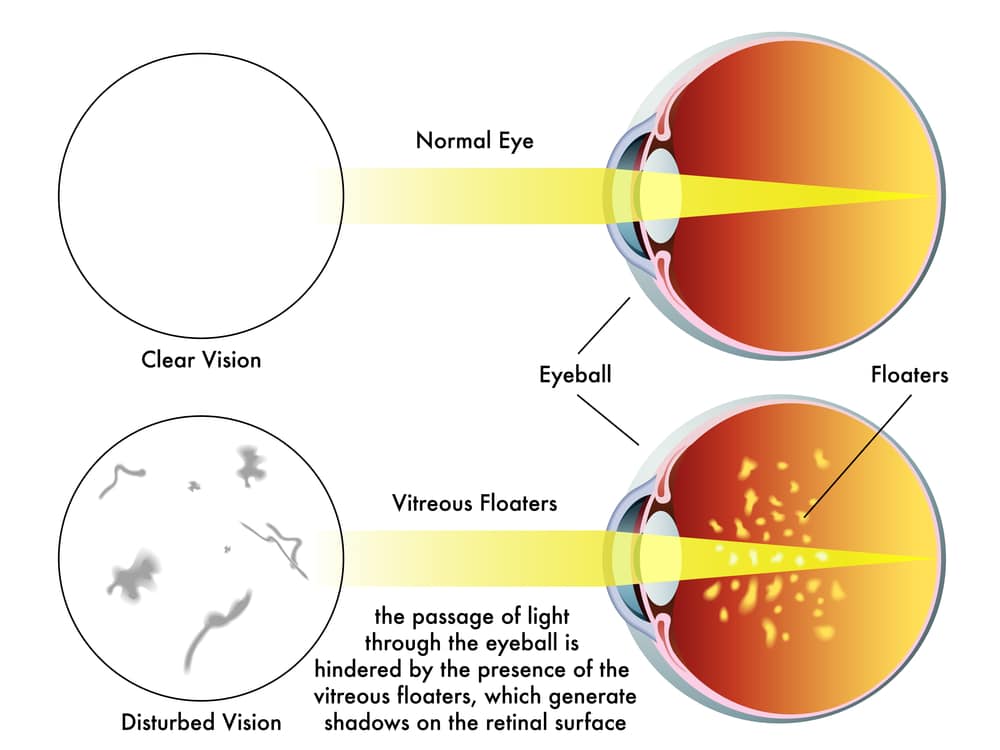
Floaters are most commonly caused by vitreous changes. Your vitreous humor is the jelly-like substance within your eye that fills the space between the retina and the lens. It helps to maintain the shape of your eyeball and acts as a shock absorber. Contrary to what you may think, eye floaters aren’t actually on the outside of your eye, but within your vitreous humor.

This is because floaters are created when little clumps form in the vitreous. This can happen simply as a result of aging, due to how your vitreous slowly pulls away from the interior surface of your eyeball. The collagen fibers in the vitreous then form strings and clumps which cast shadows on your retina – aka, floaters.

These are typically quite harmless. However, there are some serious conditions that can cause floaters. These are:

  • Inflammation. Uveitis is a type of inflammation at the back of your eye and can result from autoimmune disorders, inflammatory diseases, and infection.
  • Bleeding inside the eye. This can happen due to injury, retinal tears, retinal detachment, high blood pressure, diabetes, and blocked blood vessels. What looks like floaters are actually blood cells.
  • Retinal tears. Your vitreous naturally contracts now and then. If it contracts too hard, it can tear your retina. If left untreated, this can lead to retinal detachment. 
  • Eye medications or surgeries. These can cause bubbles in your vitreous, which look like floaters.

Contrary to what some may believe, contact lenses do not cause floaters. However, since they improve your vision, they can improve your awareness of eye floaters.

Should You Be Concerned About Eye Floaters?

In the majority of cases? No. While floaters may be mildly annoying, they’re not typically something that you need to worry about. If you have concerns, you should bring them up to your eye doctor. 
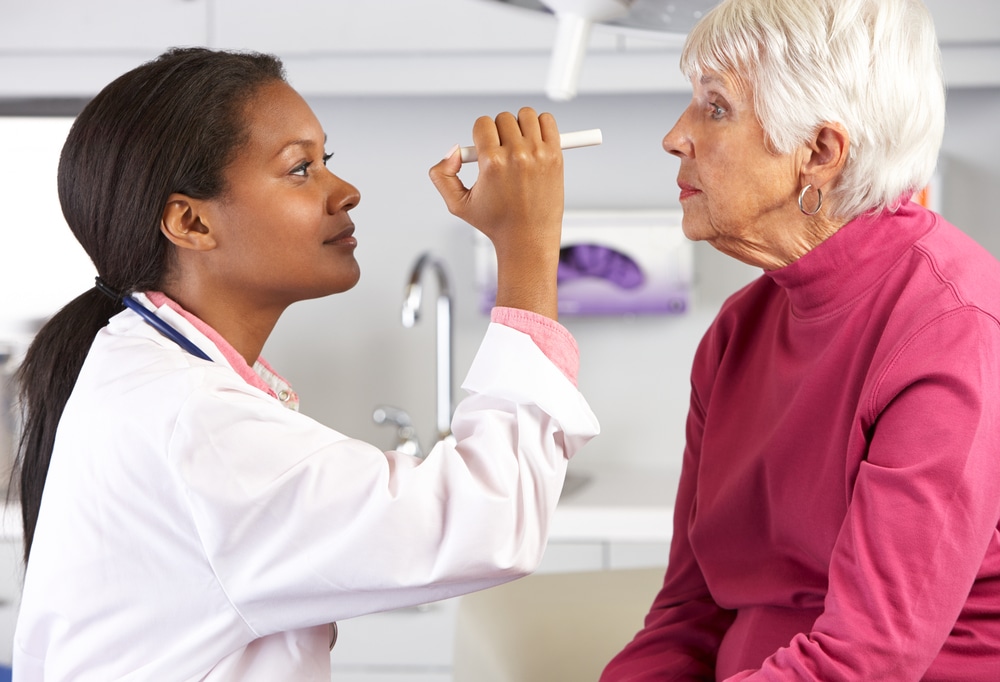
eye floaters

However, there are cases, as mentioned above, where floaters can indicate more serious issues. You should contact your eye doctor right away if:

  • You suddenly have more floaters
  • There are a lot more floaters than usual
  • There are blurry or grey areas blocking parts of your vision
  • You see flashes of light with the floaters
  • You have darkness at the side of your vision

While typically painless, these can threaten your vision and need to be treated as soon as possible. 

Some people also experience floaters and flashes during migraines or from standing up too quickly. Treating the cause treats the floaters.

How Do You Treat Eye Floaters?

As mentioned before, you usually don’t need to treat eye floaters. Your eye doctor will tell you whether you do or not.

However, if they are blocking your vision, you can undergo a surgery called a vitrectomy, where your vitreous is replaced with a salt solution. If you have some of the other issues that can cause floaters, or what look like floaters, treating the issue should treat the floaters.

If you are concerned about eye floaters, consult with your eye doctor.

If you want to improve your vision, Wolcott Optical can provide you with both glasses and contact lenses. Contact us today to learn more.


Filed Under: Eyeglasses

care for your glasses Salt Lake City Utah

If you wear contacts, you may assume that this means that you don’t need glasses too. There are many reasons why people prefer to wear contact lenses over glasses, such as an easier time playing sports and increased confidence. However, this does not mean that one type of corrective lens is better than the other – it just comes down to personal preference and your unique needs. 

If your preference is contract lenses, you may feel averse to the idea of getting a pair of glasses and think you don’t need glasses. Perhaps you don’t like how they look or you find them uncomfortable. Nonetheless, if you wear contacts, you definitely need backup glasses too. We’ll get into the reasons for this down below. 

Here’s what you need to know about why you need glasses even if you wear contacts. Let’s get into it!

#1. You Need To Rest Your Eyes

You don’t want to overwear your contacts, as this can strain your eyes and increase your risk of eye infections. This is especially true if you work a job that requires you to spend a lot of time looking at screens. When we’re looking at a screen, we blink less, which can dry out your eyes. In order to keep your contacts comfortable, your eyes can’t be dry.

Switching to glasses gives you the chance to give your eyes a bit of a break. It can be helpful to switch to glasses for a few hours at night or for a day during the week. 

#2. Your Eyes Get Irritated, Infected, Or You Have Allergies

wear contacts backup glasses need glasses

It’s wise to follow the RSVP rule when it comes to knowing when you should switch to your backup pair of glasses. Leaving your contacts in when your eyes are having problems, like itchiness or irritation, can cause quite a bit of discomfort. Taking your contacts out gives your eyes the chance to heal and can reduce symptoms, since you no longer have something on your eyes.

The RSVP rule means you should take your contacts out if your experience:

  • R. Redness in one or both of your eyes.
  • S. Secretions from your eyes, like mucus from an infection.
  • V. Vision changes, like your vision getting blurry when it’s normally clear with contacts.
  • P. Pain, such as discomfort, soreness, itching, and the like.

If you are suffering from any such symptoms, you’ll want to remove your contacts. You may need glasses in order to be able to see until your eyes get better. You may need to schedule an eye exam if symptoms persist. Once your symptoms go away, then you can wear contacts again.

#3. You Suffer Eye Trauma

You can never predict when something can happen. While no one likes to think about the possibility of an eye injury, they can still happen. If you suffer an eye injury, you will need to switch to glasses until it heals. 

contact lenses safe millcreek ut

If you don’t already have a pair of backup glasses, you may need to wait a week or longer before your order is ready – and if you have a strong prescription, you may be very limited in what you can do until your glasses arrive.

#4. Something Happens To Your Contacts

It’s always good to carry some backup glasses around with you in case something happens to your contacts. This is especially important if you’re traveling. If you were to lose a contact, it got scratched or ripped, you accidentally forgot your contacts, your eyes are having issues, or you suffer an eye injury, you’d be stuck unless you had a pair of backup glasses with you. 

#5. You Want To Go Swimming

You should never leave your contacts in when you go swimming. This is because swimming with contacts in can result in all sorts of eye problems, such as infections and even corneal ulcers. This is because water is home to many different viruses and microbes. Since soft lenses are porous, if you wear contacts while swimming, this can cause bacteria and chemicals to get lodged inside your lenses, against your eyes. 

Plus, water can cause soft lenses to tighten against your eyes. This can cause quite a bit of irritation. The FDA recommends that you do not expose your contact lenses to any type of water, be it the water at your home or the water in a swimming pool. 

It’s much easier to wear glasses to the pool so you can take them off and put them back on with no trouble than it is to need to worry about your contacts.

#6. You Need To Get Up In The Middle Of The Night

If you have children, there is suspicious activity outside, or an emergency happens, you need to be able to see easily. Not having corrective lenses can make this difficult, and you may not have the time to put your contacts in. You need glasses as a backup so that you can easily throw them on to see why your baby is crying or if the fire alarm starts going off. 

Do You Need Glasses?

glasses in midvale, ut regular eye exams Salt Lake City Utah

Wolcott Optical can help! Your glasses prescription is actually different from your contact lens prescription, so if you don’t already have both, you’ll need to get a prescription before you can order some backup glasses. While contact lenses are wonderful, it’s still important for contact lens wearers to have backup glasses just in case. Contact us today to learn more about our optical services. 

Filed Under: Eyeglasses, Contacts

Protecting your eyes is crucial in order to keep them healthy and to keep your vision strong for years to come. This is especially true if your job puts your eyes at risk. About 2000 workers in the United States have an eye-related injury on the job every day. Prescription safety glasses can help you to avoid injury while still being able to see clearly. 

Here’s what you need to know about what prescription safety glasses are like, what they can help with, and why they’re so important to your eye health.

prescription safety glasses Wolcott Optical

What Are Prescription Safety Glasses?

First things first, prescription safety glasses are just what they sound like. They’re safety glasses with a prescription. Safety glasses are used in environments where your eyes are at risk, such as when you work in a lab and need to protect your eyes from chemicals or when you work on a construction site and need to protect your eyes from any flying particles. 

Prescription safety glasses allow you to be able to see clearly while still protecting your eyes. If you wear contact lenses, then you can just wear normal safety glasses and be fine. However, if you prefer glasses, you cannot wear your glasses under your safety glasses, as this negates their effectiveness. Thus, you would need to get safety glasses that have a prescription. 

What Types Of Jobs Necessitate Safety Glasses?

You can sustain an eye injury in nearly any type of job, however, there are certain jobs that require safety glasses. The Department of Labor says that employees need protective eyewear when their jobs expose them to hazards from flying objects, flying particles, liquid chemicals, chemical gases or vapors, acids, caustic liquids, or light radiation that could cause injury. 

This means that you’d likely need safety glasses if you work in:

  • Construction
  • Laboratories
  • Welding
  • Factories
  • Mechanical projects
  • And more

The Occupational Safety and Health Administration (OHSA) requires employers to provide their employees with the necessary PPE, including safety glasses.

How Are Safety Glasses Different From Regular Glasses?

prescription safety glasses

It’s common for people to assume that their normal glasses are protection enough and that they don’t need safety glasses. This isn’t true. Safety glasses are made out of heavy-duty materials that minimize the risk of shattering. They are heat resistant and thicker than normal glasses. They have 360 coverage, so that they not only protect right in front of your eyes, but also the top, bottom, and sides that normal glasses leave exposed. 

Safety glasses need to meet specific standards set by the American National Standards Institute (ANSI) and approved by OSHA. Different safety glasses have different safety ratings which are suitable for different jobs. Your job should tell you what safety rating you need. 

Safety glasses both need to meet the standard set and approved by ANSI and OSHA and have the ANSI safety marking on them in order to be truly effective. 

How Do You Get Prescription Safety Glasses?

You can get prescription safety glasses by going to your eye care provider. You can also use your prescription to obtain prescription safety glasses from a safety glasses retailer. You will need to know the ANSI rating that your job requires, as well as your specific needs. Prescription safety glasses can be single-vision, bifocals, progressives, and more.   

It is best to select your prescription safety glasses in person. This is because you need to ensure that they’re comfortable to wear. You’re going to be wearing them for hours on end, after all. Poor-fitting glasses can result in all sorts of problems, from headaches to your glasses constantly sliding down your nose and more.

The right prescription safety glasses have your prescription, meet the ANSI rating of your job, and are comfortable for you to wear. 

prescription safety glasses

Do You Need Prescription Safety Glasses?

As you can see, prescription safety glasses are incredibly important. You cannot choose between protecting your eyes and being able to see clearly. You need both clear vision and eye protection in order to carry out your work safely and efficiently.

Wolcott Optical provides prescription safety glasses. If you are in need of safety glasses, please don’t hesitate to contact us today. We will help you select the ideal pair for your specific needs. Contact us today or stop by our store to learn more about the different types of glasses that we carry.

Filed Under: Eyeglasses

  • « Previous Page
  • 1
  • …
  • 22
  • 23
  • 24
  • 25
  • 26
  • …
  • 36
  • Next Page »
Eyeglasses Salt Lake City Utah Wolcott Optical

Hours

Wolcott Optical Services, LC
3145 S Highland Dr
Millcreek, UT 84106
801-441-3233
Monday Closed
Tuesday 9:00 AM - 5:30 PM
Wednesday 9:00 AM - 5:30 PM
Thursday 9:00 AM - 5:30 PM
Friday 9:00 AM - 5:30 PM
Saturday 10:00 AM - 3:00 PM
Sunday Closed

Hours

Monday Closed
Tuesday 9:00 AM - 5:30 PM
Wednesday 9:00 AM - 5:30 PM
Thursday 9:00 AM - 5:30 PM
Friday 9:00 AM - 5:30 PM
Saturday 10:00 AM - 3:00 PM
Sunday Closed

SUBSCRIBE & SAVE

Follow Us

fgInstagram - Wolcott Opticalx&
Salt Lake City's Best Award Winner 2021 Gold for Best Eyewear Shop by The Salt Lake Tribune

Medical Disclaimer: Information on this site is not medical advice and is for educational purposes only. No doctor-patient relationship is formed. Click here for Full Legal Disclosures


2026 | Wolcott Optical | All Rights Reserved | Privacy Policy | Terms | Accessibility Statement | Anti-Discrimination Disclaimer | Healthcare Disclaimer | HIPAA Notice of Privacy Practices | XML Sitemap | Sitemap | Site by PDM