
Millcreek UT Wolcott Optical

Wolcott Optical

Call Today!

801-441-3233
fgInstagram - Wolcott Opticalx&
  • Eyeglasses
    • Prescription Glasses
    • Bifocals
    • Reading Glasses
    • Lenses
    • Blue Light Blocking Glasses
    • Prescription Safety Glasses
    • Frames
      • Seraphin
      • Elasta
      • Kate Spade
      • Liz Claiborne
      • Etnia Barcelona Frames
      • l.a. Eyeworks
      • David Spencer Eyewear
      • Calvin Klein Frames
      • David Beckham
      • Hugo Boss
      • Nike Frames
      • Oakley Frames
      • Missoni Frames
      • Airlock Titanium Frames
      • Carolina Herrera
      • Fossil
      • Tommy Hilfiger
  • Sunglasses
    • Sunglasses For Men
    • Sunglasses For Women
    • Polarized Sunglasses
    • Prescription Sunglasses
    • Sunglass Brands
      • Maui Jim Sunglasses
      • Kaenon Polarized
      • Ray-Ban
      • Zeal Optics
      • Rudy Projects
      • Spy Optics
      • Oakley Sunglasses
      • Missoni Sunglasses
      • Fossil
  • Contacts
  • About
    • Our Team
    • Blog
  • Contact

Can Glasses Help Me See Better at Night?

Home | Eyeglasses | Page 3

Can Glasses Help Me See Better at Night?

Many people struggle to see clearly at nighttime, whether they’re driving, going for a walk, or reading. Low light, glare, and contrast sensitivity all play a big role in your ability to see after sundown. Luckily, certain types of glasses can help you see better at night. 

If you’re looking for ways to improve your night vision, keep reading to learn why it’s harder to see in low light and how the right pair of glasses can make a big difference. 

Understanding Night Vision

First, let’s explore the mechanics of night vision. In low light, your pupils dilate to let in more light. However, this dilation reduces the depth of field and sharpness, making it hard to distinguish how far away objects are. 

Furthermore, when it’s dark, the rods in your eyes take over from the cones. While rods are more light-sensitive, they lower your ability to perceive color and detail. 

If you have poor night vision, it may be due to nearsightedness or other refractive errors, dry eyes, or aging lenses in the eyes. While driving, you may experience glare from oncoming headlights, especially if you have astigmatism, which can cause starbursts or a halo effect around lights. 

While these issues are relatively common, corrective lenses and specialty coatings can help reduce their impact and help you see better at night. 

How Glasses Can Help You See Better at Night

Can Glasses Help Me See Better at Night?

Let’s take a closer look at how glasses can help you see better at night. 

  • Updated prescription lenses: Even a slightly outdated prescription can make a big difference in night vision. That’s why it’s so important to keep up with eye exams as your vision changes over time. 
  • Anti-reflective coatings: If you want to reduce glare and halos from lights at night, try glasses with an anti-reflective coating, which can improve contrast and clarity. 
  • Lenses designed for driving at night: Some lenses are optimized for low light conditions, reducing reflections and increasing contrast. 
  • Blue light filtering: While blue light glasses aren’t made specifically to improve night vision, they can help you avoid eye strain in the evening hours, especially if you spend a lot of time looking at screens. 

What Glasses Can’t Do for Night Vision

Unfortunately, glasses don’t amplify light like night-vision goggles. They can’t correct issues like cataracts or retinal problems, either; these conditions require medical care.

If you still struggle with night vision even with the right glasses, it’s important to get a comprehensive eye exam to rule out underlying eye conditions. This is especially true if driving at night feels unsafe or difficult, you notice worsening glare or halos, or you experience sudden vision changes, pain, or cloudiness. 

Additional Tips for Seeing Better at Night

Whether you wear glasses or not, there are things you can do to see better at night, including:

  • If you wear glasses, keep your lenses clean and smudge-free to avoid glare at night. 
  • Make sure your windshield is clean, as well. 
  • In general, avoid tinted lenses when driving at night, as they reduce visibility. However, yellow-tinted lenses may help reduce glare from bright headlights. 
  • While indoors, use proper lighting to avoid eye strain, especially while reading, crafting, or doing anything that requires small details. 
  • Visit your optometrist regularly to ensure your prescription is up to date.

Find the Perfect Glasses for Your Needs at Wolcott Optical

Can Glasses Help Me See Better at Night?

Glasses can absolutely help you see better at night, especially when you have the right prescription and anti-reflective lens coatings. For best results, it’s essential to seek professional guidance from the experts. 

At Wolcott Optical, we offer an endless range of vision solutions. Whether you want to be able to see better at night, shield your eyes from the sun during the day, or make it easier to read small print, we’re here to help. From prescription glasses and contact lenses to blue light-blocking glasses and safety glasses, we have the tools you need to see the world more clearly. 

If you want to see better at night, visit Wolcott Optical in Salt Lake City, Utah, today to explore your options, consult with our experienced team, and learn more about how the right pair of glasses can improve your night vision. 

Filed Under: Eyeglasses

Are Prescription Sunglasses Worth It?

Let’s face it: Eyeglasses can be expensive. While the benefits of clear vision are definitely worth the price, many people wonder if prescription sunglasses are a worthwhile investment. Some turn to common alternatives like clip-ons, transition lenses, combining contacts with regular sunglasses, or simply wearing their sunglasses over their prescription eyeglasses. 

If you’re wondering whether prescription sunglasses are worth the cost, keep reading to learn more about their benefits, alternatives to consider, and how to choose the right solution for your needs. 

What Are Prescription Sunglasses?

Prescription sunglasses are just like regular eyeglasses, but with tinted lenses to protect your eyes from harsh sunlight. Like eyeglasses, they’re available with single vision, bifocal, and progressive lenses — plus, they can be polarized or mirrored. Most regular frames can be ordered as sunglasses, giving you a wide range of styles and colors to choose from. 

Benefits of Prescription Sunglasses

The benefits of prescription sunglasses include:

  • Clear vision outdoors: They combine corrective lenses with sun protection, eliminating the need to switch between glasses and sunglasses. 
  • UV protection: By blocking UV rays, they can reduce your risk of cataracts, macular degeneration, and other eye problems. 
  • Reduced glare: Polarized lenses reduce glare while driving, spending time at the beach, lounging around the pool, or exploring the snow-covered hills. 
  • Comfort and eye health: Reducing eye strain and squinting can help prevent headaches and discomfort caused by exposure to bright sunlight. 
  • Convenience: They eliminate the hassle of layering two pairs of glasses or constantly switching between them.

Common Alternatives to Prescription Sunglasses

Prescription sunglasses aren’t the only option for sun-friendly vision correction. Some people opt for alternatives like:

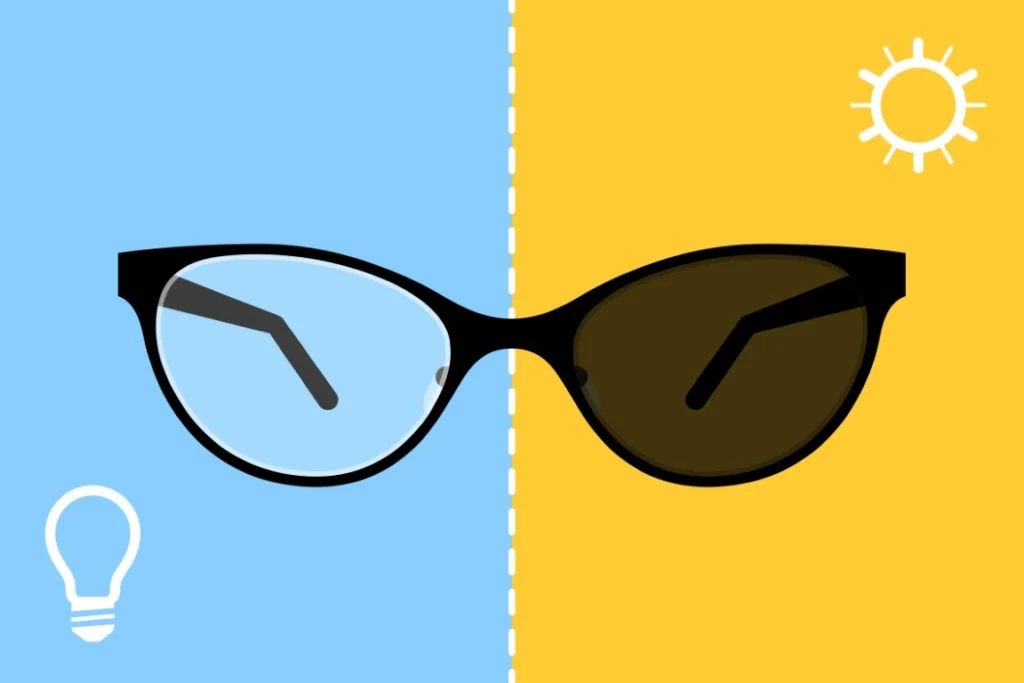
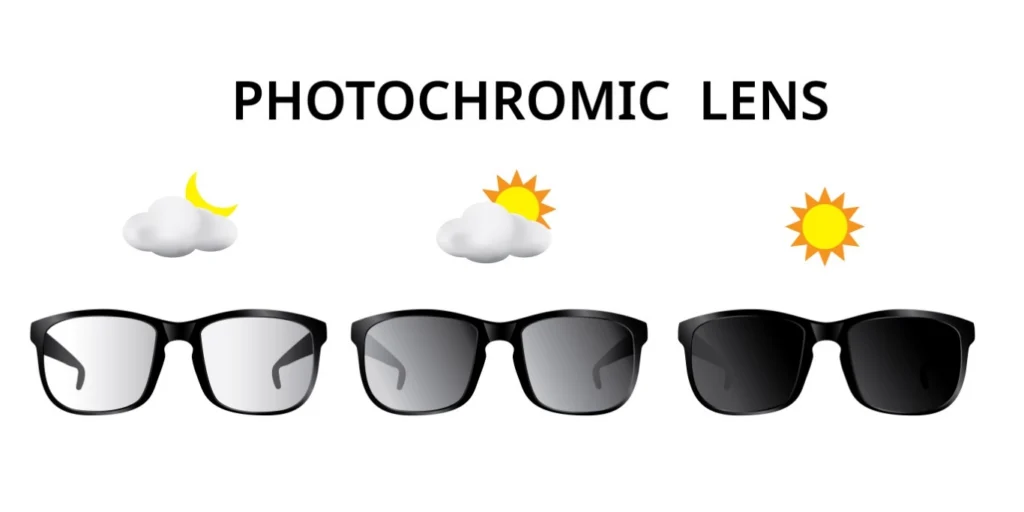
  • Transition/photochromic lenses: These lenses darken when exposed to sunlight and turn transparent again while indoors. However, they don’t always work well while driving, and some brands take longer to adjust than others, especially in cold weather. 
  • Clip-on sunglasses: Clip-on sunglasses can be attached to your eyeglasses when you need them and taken off when you don’t. They’re affordable, but often less stylish and low-quality. 
  • Contacts and sunglasses: Those who wear contacts can wear regular sunglasses at the same time. While this works great for some, not everyone likes or can wear contacts.
  • Over-the-glasses sunglasses: While functional, these sunglasses are typically bulky and less fashionable.

Cost Considerations

While budget options are available, quality prescription sunglasses are an investment. Depending on the frames, lenses, and coatings you choose, they can be just as — if not more — expensive than prescription eyeglasses, especially if you opt for designer frames. However, their long-term benefits — including longevity, durability, enhanced protection, and eye health advantages — often outweigh the initial cost. Plus, insurance coverage or package deals may reduce the price, making them more affordable. 

Who Should Consider Prescription Sunglasses?

Are Prescription Sunglasses Worth It?

So, who should consider prescription sunglasses? People who spend significant time outdoors or in the car — commuters, athletes, outdoor enthusiasts, drivers, or travelers — can definitely benefit from them, especially if they struggle with light sensitivity or other eye problems. 

They’re also great for style-conscious individuals who want a balance between vision correction and fashion, along with anyone who’s frustrated with alternatives like clip-ons or transition lenses.

If you typically wear contacts, you can get by most of the time with regular sunglasses, since you don’t need the corrective benefits of prescription lenses, on top of your contacts. However, prescription sunglasses are nice to have around for the times when you can’t wear contacts, such as when you’re splashing around at the pool or are battling eye irritation.

Choosing the Right Prescription Sunglasses

If you’ve decided to invest in prescription sunglasses, it’s important to get the right pair for your needs, which is why it’s a good idea to get a professional fitting at an eyeglass store. Optical professionals can help you choose the right lens options, whether it’s tinted, polarized, gradient, mirrored, or anti-reflective coatings. They’ll recommend durable, comfortable frames that fit your lifestyle and express your personality. 

Prescription Sunglasses at Wolcott Optical

Are Prescription Sunglasses Worth It?

If you’re looking for prescription sunglasses in Salt Lake City, Utah, trust the professionals at Wolcott Optical. Our team members would love to help you choose sunglasses that combine clear vision, UV protection, convenience, and style, whether you need corrective lenses or not. Come visit us to try on different frames, explore your options, and consult with experts about whether prescription sunglasses are right for you. And if you have any questions about what eyewear we offer, feel free to contact us. 

Filed Under: Eyeglasses

In the world of eye health, there’s plenty of misinformation out there stemming from people’s desire to protect their eyesight. It’s important to be able to distinguish between myths and reality to ensure you’re taking the proper steps to keep your eyes healthy. 

Keep reading to learn the truth behind six pervasive myths about eye health and vision. 

Myths About Eye Health and Vision

Myth #1: You Can Improve Your Vision by Eating Carrots

You’ve probably heard somewhere that eating carrots is a good way to improve your vision. Maybe your parents even told you this when you were a child to get you to eat your vegetables. However, it’s not that simple. 

This myth originated during World War II when, in an attempt to conceal their use of aircraft interception radar, the Royal Air Force claimed its pilots could strike down enemy bombers at night because they ate carrots to improve their night vision. 

Carrots contain beta carotene, which the body converts to vitamin A. Vitamin A deficiency can lead to night blindness or other vision problems, which means that correcting the deficiency can reverse certain issues. However, for people whose eyes are already healthy, eating carrots won’t improve their vision — it will simply help them maintain it. 

Myth #2: If You Cross Your Eyes, They’ll Get Stuck Like That

Myths About Eye Health and Vision

Many children are told that if they cross their eyes, they’ll get stuck like that. This myth likely originated as a way to discourage children from making funny faces during inappropriate times; however, it’s not based in truth. 

Your eye muscles allow your eyes to move in all directions, including convergently (what happens when you cross your eyes). Voluntarily crossing your eyes won’t result in them getting stuck. There are conditions that can result in crossed eyes, but they have nothing to do with making a silly face every once in a while. 

Myth #3: People With Color Blindness See in Black and White

When you imagine what color blindness might be like, you may envision a world that resembles a black-and-white movie. While rare, complete color blindness can occur. However, in the vast majority of cases, people with color blindness can still see at least some color. 

The most common form of color blindness is an inability to distinguish between red and green. Blue-yellow color vision deficiency is less common. 

Myth #4: Sitting Too Close to the TV Can Harm Your Eyes

As children, many people are told not to sit too close to the TV, as doing so can damage their eyes. In reality, there’s not anything to worry about besides temporary eye strain. 

This myth likely stems from a misunderstanding of cause and effect. If your child tends to sit close to the TV or bring screens close to their face, it may indicate that they’re nearsighted and may not be able to clearly see things at farther distances. In this case, nearsightedness is the cause, and sitting close to the TV is the effect. 

Myths About Eye Health and Vision

Myth #5: Reading in the Dark Can Harm Your Eyes

If you stayed up past your bedtime as a kid, nose buried in a book you just couldn’t put down, your parents probably warned you that reading in the dark can damage your eyesight. While it’s true that reading in low light can cause eye strain and headaches, there’s no evidence that it leads to long-term damage. 

Still, it’s not a good idea to read in the dark for extended periods of time, as it’s not particularly easy or comfortable. Turn on a lamp the next time a page-turner keeps you up late into the night. 

Myth #6: Wearing Glasses with the Wrong Prescription Can Harm Your Eyes

When adults wear glasses with the wrong prescription, they may experience eye strain, blurred vision, fatigue, soreness in the eyes, and trouble concentrating. However, these effects are temporary and aren’t likely to cause any lasting damage. 

Children, on the other hand, are more susceptible to harm due to an improper prescription. Because their vision is still developing, wearing glasses with the wrong prescription can worsen astigmatism, hyperopia, and myopia. If you suspect your child’s glasses aren’t right for them, it’s important to get an updated prescription as soon as possible. 

Trust the Experts at Wolcott Optical

At Wolcott Optical, we’re experts in all things glasses and contacts. If it’s time to upgrade your vision aids, trust our team to provide solutions tailored to your needs. Come visit our store in Salt Lake City, Utah, today!

Filed Under: Eyeglasses

  • « Previous Page
  • 1
  • 2
  • 3
  • 4
  • 5
  • …
  • 33
  • Next Page »
Eyeglasses Salt Lake City Utah Wolcott Optical

Hours

Wolcott Optical Services, LC
3145 S Highland Dr
Millcreek, UT 84106
801-441-3233
Monday Closed
Tuesday 9:00 AM - 5:30 PM
Wednesday 9:00 AM - 5:30 PM
Thursday 9:00 AM - 5:30 PM
Friday 9:00 AM - 5:30 PM
Saturday 10:00 AM - 3:00 PM
Sunday Closed

Holiday Hours

We will be closed on Thursday, the 27th, for Thanksgiving Day

Hours

Monday Closed
Tuesday 9:00 AM - 5:30 PM
Wednesday 9:00 AM - 5:30 PM
Thursday 9:00 AM - 5:30 PM
Friday 9:00 AM - 5:30 PM
Saturday 10:00 AM - 3:00 PM
Sunday Closed

Holiday Hours

Saturday, Feb. 14th Closed

SUBSCRIBE & SAVE

Follow Us

fgInstagram - Wolcott Opticalx&
Salt Lake City's Best Award Winner 2021 Gold for Best Eyewear Shop by The Salt Lake Tribune

Medical Disclaimer: Information on this site is not medical advice and is for educational purposes only. No doctor-patient relationship is formed. Click here for Full Legal Disclosures


2026 | Wolcott Optical | All Rights Reserved | Privacy Policy | Terms | Accessibility Statement | Anti-Discrimination Disclaimer | Healthcare Disclaimer | HIPAA Notice of Privacy Practices | XML Sitemap | Sitemap | Site by PDM