Millcreek UT Wolcott Optical

Wolcott Optical

Call Today!

801-441-3233
fgInstagram - Wolcott Opticalx&
  • Eyeglasses
    • Prescription Glasses
    • Bifocals
    • Reading Glasses
    • Lenses
    • Blue Light Blocking Glasses
    • Prescription Safety Glasses
    • Frames
      • Seraphin
      • Elasta
      • Kate Spade
      • Liz Claiborne
      • Etnia Barcelona Frames
      • l.a. Eyeworks
      • David Spencer Eyewear
      • Calvin Klein Frames
      • David Beckham
      • Hugo Boss
      • Nike Frames
      • Oakley Frames
      • Missoni Frames
      • Airlock Titanium Frames
      • Carolina Herrera
      • Fossil
      • Tommy Hilfiger
  • Sunglasses
    • Sunglasses For Men
    • Sunglasses For Women
    • Polarized Sunglasses
    • Prescription Sunglasses
    • Sunglass Brands
      • Maui Jim Sunglasses
      • Kaenon Polarized
      • Ray-Ban
      • Zeal Optics
      • Rudy Projects
      • Spy Optics
      • Oakley Sunglasses
      • Missoni Sunglasses
      • Fossil
  • Contacts
  • About
    • Our Team
    • Blog
  • Contact

5 Eye Care Tips: Preventing And Caring For Styes

Home | Eyeglasses | Page 28

A stye is a painful red bump that appears on the edge of your eyelid that is caused by an eyelash becoming infected or clogged with makeup, dirt, or some other type of debris. Styes are usually caused when an oil gland in your eyelid becomes inflamed due to getting blocked up. Eye care for styes and other similar eye issues is not overly complicated, but it is useful to understand what it is that you can do in order to prevent them. 

Styes are very common, but can be painful, annoying, and unattractive. Usually they will go away on their own, but they also may return without the proper eye care treatments. In some cases, an individual may require help from medical professionals to get a stye removed and to prevent future styes.

Use Proper Eye Care Cleaning Habits

The first and most obvious way to take care of your eyes and any potential styes that may appear is to practice proper eye care cleaning habits. Because styes, chalazions, and other eye issues are often caused by improper eye care, keeping your eyelids clean is vital. Make sure to use a sensitive soap, such as baby shampoo, and a warm washcloth to gently clean your eyelids every evening. 

styes

Completely Remove Makeup

If you wear makeup, you could potentially be at risk of getting a stye. Makeup that is left on your eyes is a common reason why a stye forms. Ensure that you remove all makeup and dirt that has collected throughout the day. If a stye appears, then make sure to keep your lids properly clean as you would without a stye. It is also important to replace makeup every six months or so because old makeup can also plug the follicles of your eyelashes and eyelids.

Refrain From Touching Your Eyes

If you are prone to getting styes or chalazions, then it is extremely important to try not to touch your eyes. Touching your eyes can spread the infection from one eye to the other and can irritate the eyelid, causing other styes to form or for the styes to grow larger. This is especially true if your hands are dirty. Make sure that when you care for your eyelids, you use clean hands. It is also important to note that if you wear contact lenses that you should try to wear glasses while the stye is healing or clean the lenses after each use, as lenses can transfer the infection.

For more information about contact lenses and glasses or to find the perfect lenses for you, reach out to us at Wolcott Optical.

Use At-Home Treatments

As previously mentioned, styes typically will go away on their own over time. However, there is a way to help a stye get better quicker. Using a warm washcloth, press against the stye gently for about 10 minutes. Do this three to four times a day. The warmth and moisture from the washcloth will help unclog the eyelash follicles. This method can be used at home, and can be repeated as many times as necessary.

See A Doctor

In some circumstances, styes may be caused by underlying skin conditions. In these cases, it is vital to see a doctor. An eye doctor can give you more information about potential causes of your styes, give you more eye care tips, and prescribe medications that could be useful for your condition. If your stye becomes large, is affecting your vision, or is sticking around for more than a week, it may be time to see your doctor. Lastly, a doctor can safely and hygienically drain a stye that is extra stubborn.
Filed Under: Eyeglasses

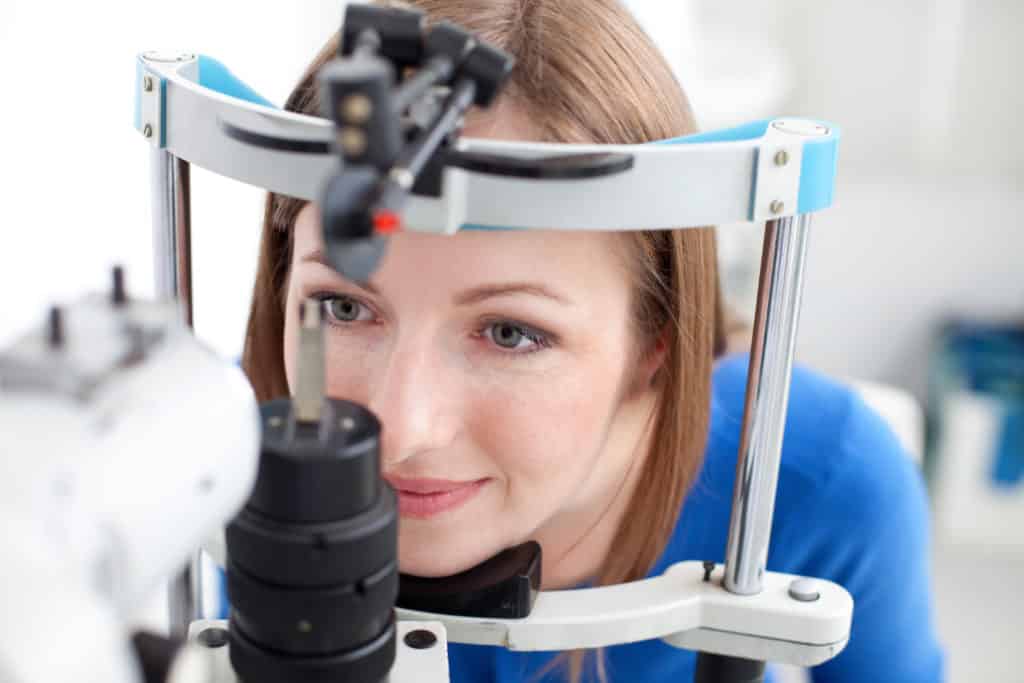
Eyes provide so many benefits to us. They allow us to take in information and to see the faces of our loved ones. They provide a way to communicate and to connect. To protect and potentially improve your vision, it is a good idea to get an eye exam. Continue reading to learn the benefits of eye exams and how often you should get an eye exam.

How Often To Get An Eye Exam

Eye exams provide a myriad of benefits, but at what frequency should you get an eye exam? The answer to this question relies entirely on your age. Recommendations will also change based on your medical history and whether you already wear glasses or contacts. 

6 Months

Most doctors recommend having your baby’s eyesight checked when they reach 6 months of age. As your baby grows, make sure to look out for indications of eye strain, although these indications may not show up until later.

6 Years

We recommend that if you have a child that will soon be entering kindergarten that you take them to get an eye exam. Soon the child will be learning to read and asked to use their eyes, so it is important that they can see clearly. As your child grows, they will be able to express their feelings and pain better.

This is when you will be able to spot indications of eye strain. If your child tells you that they have headaches or that they are tired, if they frequently blink or rub their eyes, tilt their head to the side, have difficulty paying attention in school, or squint, then they could be in need of a pair of glasses or have some sort of eye problem.

6-20 Years

It is advisable to get an eye exam every two years to ensure that you or your child’s eyesight is doing well. Eye exams should be every six months if you wear glasses in order to ensure that the prescription is still appropriate and working correctly. Always be in contact with your optometrist or doctor if you suspect that your child has eye issues.

20-40 Years

get an eye exam

For adults who are within the age range of 20-39, it is recommended to have a complete eye exam every two to three years. The older that you are, the more likely you are to have rapid vision loss. If you feel that your vision is changing, get in contact with your doctor.

40-65 Years

During this time period, your eyes go through a lot. Vision will begin to decline and the lenses of your eyes will begin to harden. As the lenses harden, people begin to develop nearsightedness. An eye exam can help you to know if you are in need of reading glasses as well as prevent any other diseases. We recommend going to get an exam every couple of years or so.

65+ Years

At this point, it is important to get a yearly eye exam. This is because seniors are more likely to develop severe vision problems. An eye exam can help to prevent or better eye issues.

Benefits of Eye Exams

One of the first benefits of eye exams is that they provide overall health benefits. When you get your eyes checked out, you are not only checking for issues for your eyes but you are also checking for issues with overall health. The eyes are one of the first areas of the body that show illness. Getting regular eye exams can help detect health issues early.

Another benefit of getting regular eye exams is that it will determine if you need further eye enhancements. Eye exams are the way that people typically discover whether they need to wear contact lenses or glasses. Without the proper glasses or contacts, people may develop eye strain and other eye problems.

An eye exam also provides the ability to test for problems including diseases like glaucoma and cataracts. With an eye exam, you ensure that you or your child is not at risk for developing disease, and can take any preventative measures that are required.

If you go to an eye exam and find that you are in need of a new pair of glasses, reach out to us at Wolcott Optical. We would be happy to help you find a pair of glasses that suits your personality and provides the proper eye correction options.

Filed Under: Eyeglasses, Contacts Tagged With: eye exams

Your eyes are one of the most complicated and interesting parts of your body. They are able to refract light, allowing you to see. At least, that is what they do when they are working properly. Unfortunately, there is a large portion of the population in the United States that cannot see well or have eye problems. There are all sorts of different types of eye problems, however there are some eye problems that are more common than others. Luckily, with the right prescription glasses or contact lenses, most of these eye problems can be fixed.

The Most Common Eye Problems

common eye problems

In general, eye problems are extremely common. Almost everyone either wears glasses and contacts or knows someone who does. Due to the substantial number of people who have eye issues, there has been extensive research and findings about how to treat eye issues and some problems have recurred overtime.

Some of the most common eye problems fall under a category called refractive errors. Refractive errors are caused when the eye has difficulty processing light as it enters into the eye, causing the affected person to have a difficult time seeing. The three types of refractive errors include myopia, hyperopia, and astigmatism. 

With a prescription from your eye doctor, Wolcott Optical can help fix all three of these eye problems.

Myopia

Myopia, otherwise known as nearsightedness, is an eye condition in which a person can see objects that are right in front of them but cannot see faraway objects well. In most cases of myopia, people can make out objects that are far, but they are extremely blurry. Typically if a person deals with nearsightedness, then they have family members who also have myopia. Also, a person is not always born with myopia, it can develop overtime. Most of the time, myopia can be corrected and treated  with glasses or contact lenses.

Hyperopia

Hyperopia is another common eye issue caused by a refractive error. Hyperopia is another way to say farsightedness. Farsightedness is the word used to describe the condition in which a person can see objects that are far away but have a difficult time seeing objects that are close by. Hyperopia is most frequently diagnosed in adults. Squinting to see nearby objects is an indication that an individual may be experiencing hyperopia. Another potential sign that a person may be farsighted is that reading or looking at a computer screen for a long period of time will cause eye strain or a headache.

Astigmatism

Astigmatism is another very common eye problem that is caused by an imperfection in the curvature of a part of the eye. The imperfection is typically located in the cornea or the lens. With astigmatism, the eye is unable to focus the light on a single point. Usually if a person is plagued with astigmatism, they will have issues seeing things that are far away from them and things that are close by. The world will appear very blurry or distorted. Astigmatism can be improved with the implementation of contact lenses or glasses.

Need Help Improving Your Vision?

After learning about the previous common vision problems, you may have found that you or somebody that you know has been affected by one of these problems. If this is the case, see your ophthalmologist or optometrist to obtain a prescription and let Wolcott Optical help you find the perfect pair of glasses to address your vision needs. We have been providing the highest quality eye care for many years and would be delighted to help you too. Reach out to us today.

Filed Under: Eyeglasses Tagged With: astigmatism, common eye problems, hyperopia, myopia

  • « Previous Page
  • 1
  • …
  • 26
  • 27
  • 28
  • 29
  • 30
  • …
  • 36
  • Next Page »
Eyeglasses Salt Lake City Utah Wolcott Optical

Hours

Wolcott Optical Services, LC
3145 S Highland Dr
Millcreek, UT 84106
801-441-3233
Monday Closed
Tuesday 9:00 AM - 5:30 PM
Wednesday 9:00 AM - 5:30 PM
Thursday 9:00 AM - 5:30 PM
Friday 9:00 AM - 5:30 PM
Saturday 10:00 AM - 3:00 PM
Sunday Closed

Hours

Monday Closed
Tuesday 9:00 AM - 5:30 PM
Wednesday 9:00 AM - 5:30 PM
Thursday 9:00 AM - 5:30 PM
Friday 9:00 AM - 5:30 PM
Saturday 10:00 AM - 3:00 PM
Sunday Closed

SUBSCRIBE & SAVE

Follow Us

fgInstagram - Wolcott Opticalx&
Salt Lake City's Best Award Winner 2021 Gold for Best Eyewear Shop by The Salt Lake Tribune

Medical Disclaimer: Information on this site is not medical advice and is for educational purposes only. No doctor-patient relationship is formed. Click here for Full Legal Disclosures


2026 | Wolcott Optical | All Rights Reserved | Privacy Policy | Terms | Accessibility Statement | Anti-Discrimination Disclaimer | Healthcare Disclaimer | HIPAA Notice of Privacy Practices | XML Sitemap | Sitemap | Site by PDM